
What Is Metamorphosis?
A butterfly does not simply grow bigger. Its body changes form in a remarkable four-stage journey.
The short answer
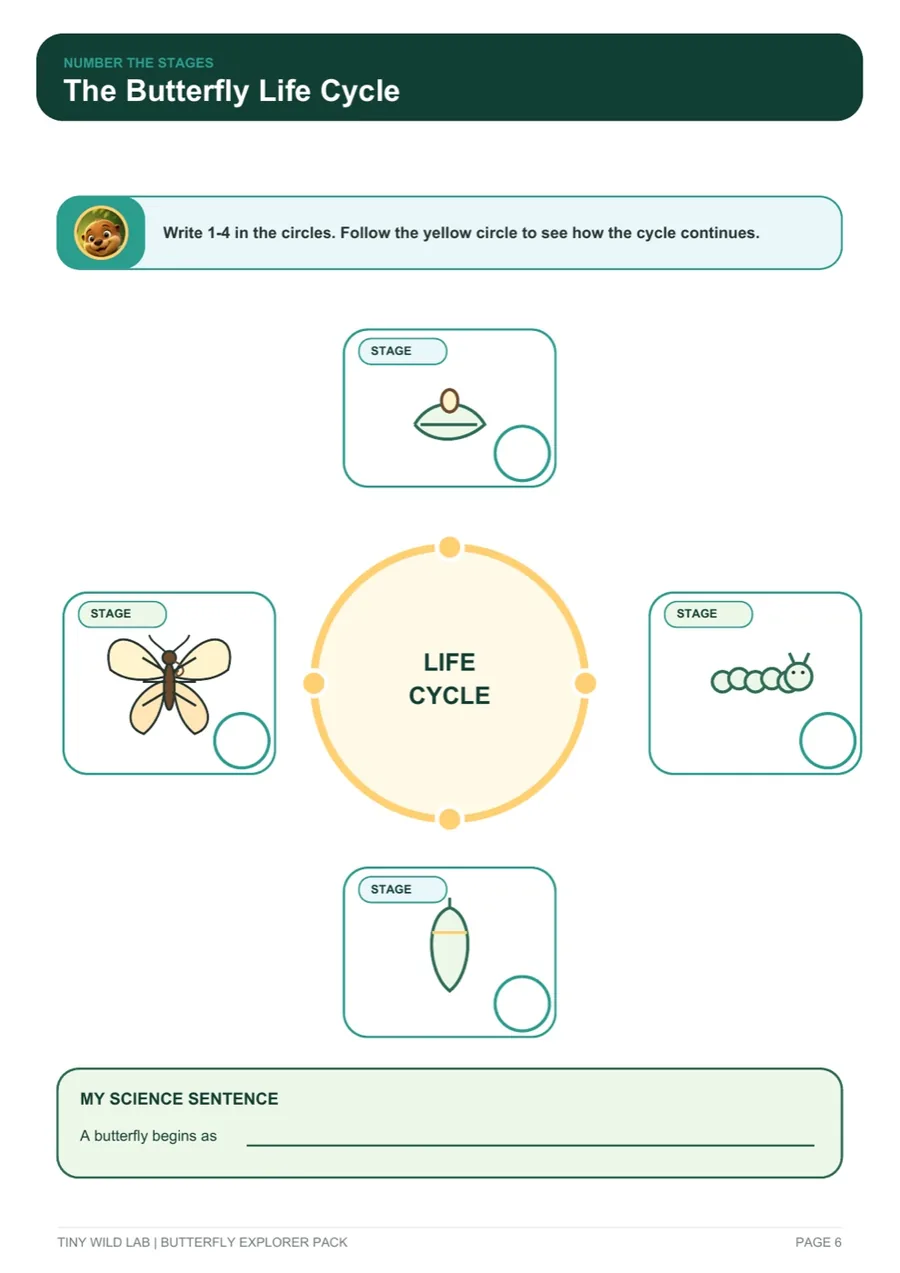
Metamorphosis is a big change in an animal's body as it grows. A butterfly goes through complete metamorphosis in four stages: egg, caterpillar (larva), chrysalis (pupa) and adult. The caterpillar and butterfly look very different because the body is reorganized during the pupa stage.
Why is it called complete metamorphosis?
“Complete” means the young stage and the adult stage have very different body shapes and jobs. A caterpillar is built to eat and grow. An adult butterfly has wings, long legs and a coiled feeding tube called a proboscis.
The four butterfly stages
Egg
A tiny caterpillar begins developing inside an egg laid on a suitable plant.
Larva
The caterpillar eats, grows and sheds its outer skin several times.
Pupa
Inside the chrysalis, the body is reorganized for adult life.
Adult
The butterfly emerges, expands its wings and can begin the cycle again.
What happens inside a chrysalis?
The pupa is not asleep. Some larval tissues break down while adult structures develop and grow. The result is not a caterpillar with wings attached, but an adult body with a new shape and new jobs.
Try a four-stage movement game
- Curl into a tiny egg.
- Crawl and pretend to munch like a caterpillar.
- Stand very still like a chrysalis.
- Open your arms slowly like drying butterfly wings.
Ask the child which movement looked most different from the adult butterfly—and why.
Sources and further reading
This guide was checked against the following public science and education sources. We summarize them in child-friendly language rather than copying their wording.
- National Park Service: Butterflies and Moths
- Florida Museum: Butterfly Rainforest FAQ
- National Park Service: Butterfly Ecology
- National Park Service: Observe Butterflies Safely
See our editorial standards for how Tiny Wild Lab researches, reviews and updates science content.